This corridor encompasses some of Alaska’s most critical transportation and energy assets, including portions of the Trans-Alaska Pipeline System corridor, the Dalton Highway, and proposed routes for the Ambler Road and Alaska Liquified Natural Gas projects.
Interior Transfers 1.4 Million Acres in Dalton Utility Corridor to State of Alaska
BLM Alaska Press Release, May 6, 2026
ANCHORAGE, Alaska – Today, the Department of the Interior announced a major Alaska statehood land transfer to convey approximately 1.4 million acres of land along the Dalton Utility Corridor to the State of Alaska. With conveyance of these lands north of the Yukon River, the Bureau of Land Management has fulfilled more than 96% of the state’s entitlement under the Alaska Statehood Act, expanding Alaska’s opportunities for resource development, strengthening local economies, and enhancing the state’s control of its own economic destiny.
“This decisive action puts Alaska at the forefront of American Energy Dominance,” said Secretary of the Interior Doug Burgum. “President Trump is delivering on his commitment to unleash Alaska’s vast resources—advancing the Alaska Liquefied Natural Gas project, the Ambler Road, and the Trans-Alaska Pipeline—to strengthen our economy, bolster national security, and drive down costs for American families.”
This transfer comes after Public Land Order No. 7966 opened approximately 2.1 million acres of lands within the corridor for selection under the Alaska Statehood Act and to location and entry under public land and mining laws. That February 2026 opening order allowed “top filed” land (i.e., land previously unavailable for state selection but which Alaska sought to acquire) to become valid state selections available for conveyance.
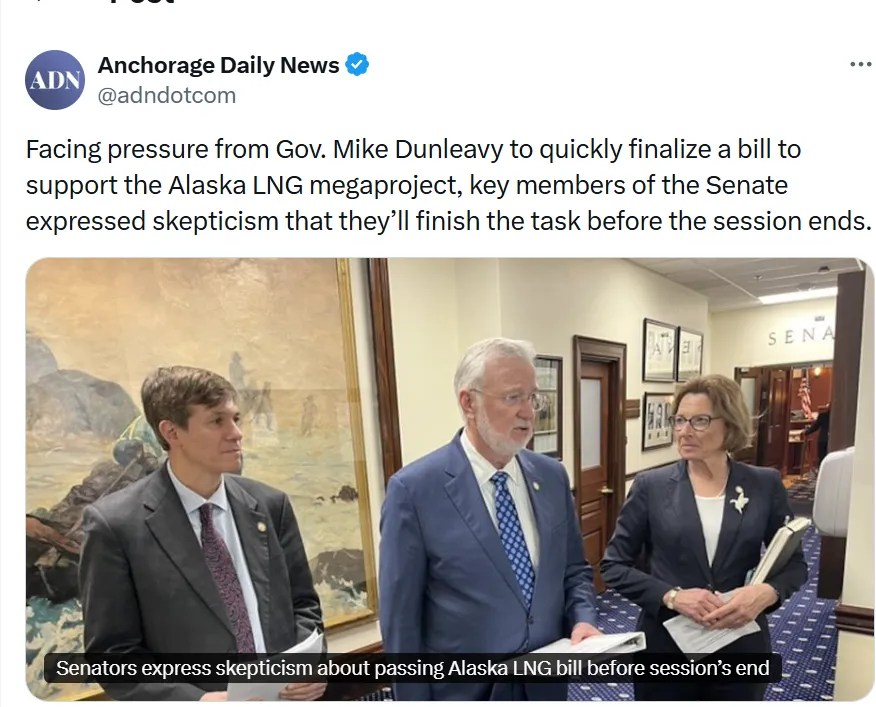
“On behalf of the State of Alaska, I want to thank Interior Secretary Burgum and his dedicated staff for completing the transfer of the Dalton Utility Corridor to state ownership,” said Alaska Governor Mike Dunleavy. “This milestone represents a leap forward in advancing Alaska’s ability to responsibly develop its resources and advance economic opportunity across Alaska. We appreciate our partnership and collaboration with President Trump that made this transfer possible, and we look forward to putting this corridor to work for the benefit of all Alaskans. President Trump delivered when other presidents did not.”
This transfer marks significant progress on fulfilling Alaska’s statehood entitlements, a responsibility of the BLM Alaska Land Transfer Program. With this conveyance, the state has 3.8 million acres remaining of their 105-million-acre entitlement under the Alaska Statehood Act.
“For far too long, we have been at a relative standstill on statehood entitlements because these critically important lands were off the table,” said BLM Alaska State Director Kevin Pendergast. “We are proud to make this unprecedented progress with the State of Alaska and look forward to continued partnership ahead.”
As Alaska takes control of these lands, the Alaska Department of Natural Resources continues its public process to identify and address potential impacts to public access in the area.
“This transfer is the result of extraordinary work by dedicated Department of Natural Resources staff to secure these long-promised critical infrastructure lands,” said Alaska Department of Natural Resources Commissioner-designee John Crowther. “Thanks for our federal partners for effectuating this transfer, and we look forward to stewarding these lands while ensuring Alaskans continue to have access to adjacent federal lands.”
This corridor encompasses some of Alaska’s most critical transportation and energy assets, including portions of the Trans-Alaska Pipeline System corridor, the Dalton Highway, and proposed routes for the Ambler Road and Alaska Liquified Natural Gas projects. This conveyance unlocks these and other resource opportunities in Alaska, consistent with Executive Order 14153 and Secretary’s Order 3422, both titled “Unleashing Alaska’s Extraordinary Resource Potential.”
White House Backs Alaska LNG Tax Reform as Legislative Deadline Nears
Jacob Dick, Natural Gas Intelligence, May 6, 2026
The White House has lent its support to Alaska legislation aimed at advancing the long-delayed Alaska LNG project, urging state lawmakers to consider tax reforms that could incentivize the massive export facility.
The number of active hardrock exploration permits in Alaska swelled by 100% between 2018 and 2025, according to state data. And regulators are anticipating 20 entirely new early-stage mining projects this year.
With gold prices still soaring, a major Alaska mine proposal is getting a new look
Max Graham, Northern Journal, May 5, 2026
For years, some of Alaska’s largest mining proposals inched along, unable to attract big investment. Then the price of gold took off.
A massive gold mining project north of Fairbanks treaded water for years, without an investor willing to pour billions of dollars into construction.
Now, it’s getting a fresh look.
The owners of the Livengood project recently raised more than $100 million to push it forward, and they’re now planning new drilling and an updated economic study. Like mining companies across Alaska, they’re eager to capitalize on soaring gold prices.
“I joined this project in 2010 to build another mine, and it’s just exhilarating now to start taking the steps that can actually realize that dream,” said Karl Hanneman, chief executive of International Tower Hill Mines, the publicly traded company that owns the project.
The new momentum behind Livengood is just one example of how record mineral prices are drawing new interest and investment into Alaska’s mining industry.
The price of gold has quadrupled in the past decade, and now hovers above $4,500 an ounce. Other minerals, like silver and copper, also have been trading at historically high prices, making once-marginal developments increasingly attractive to investors.
“Whenever there’s a bull market, people come rushing in, and then a lot of projects that have been sitting on the sidelines because they couldn’t get financing all of a sudden qualify, simply because the pool of money is larger,” said Douglas Silver, a Colorado-based mineral economist and financier with decades of industry experience.